
“Hey Siri, pause the music.”
Samata Luintel does this every time, even though she knows she will pull her AirPods out a second later.
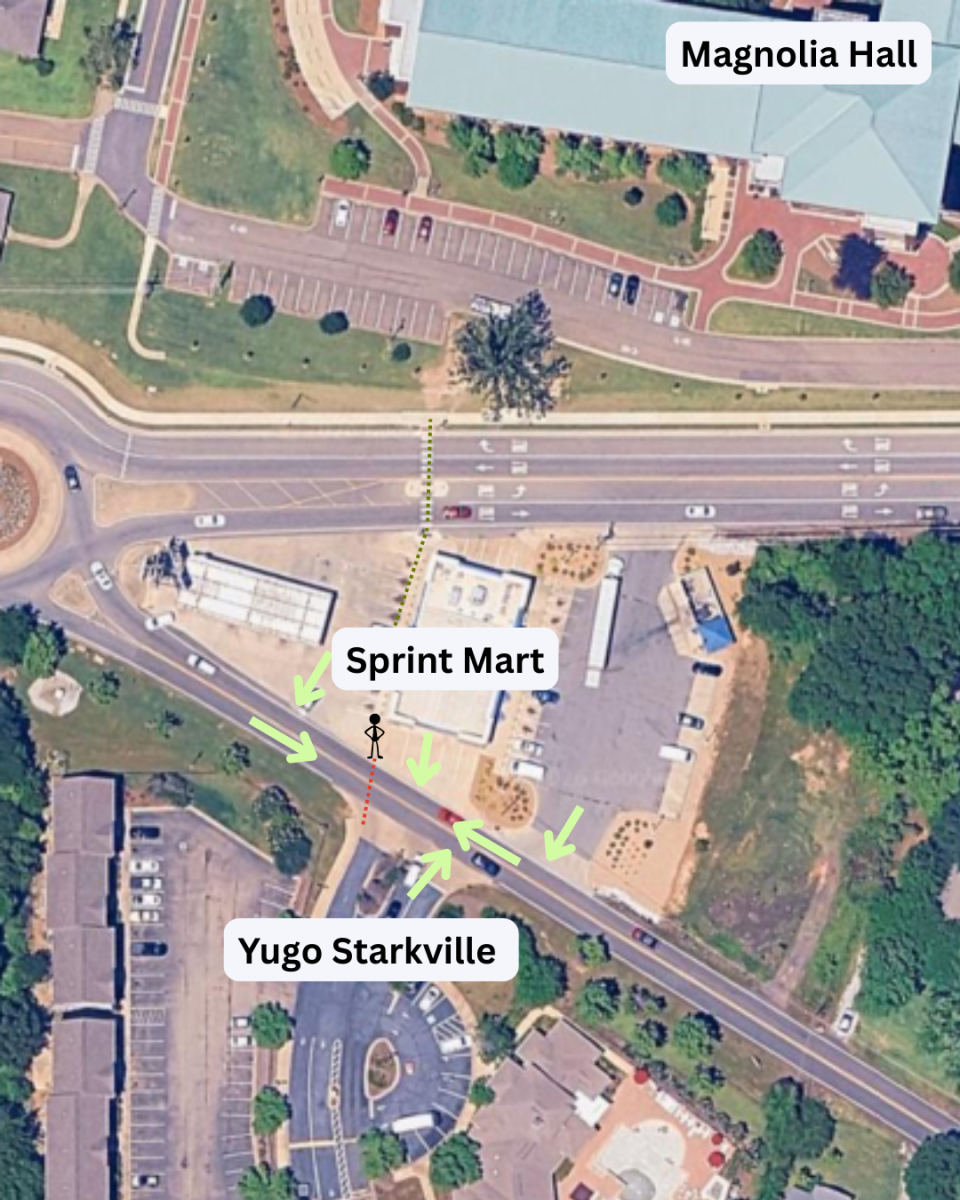
Her music fades out and so does her flow of walking when she reaches the Sprint Mart, just south of Mississippi State University’s campus near Magnolia Hall. She stops there daily, waiting to cross Oktoc Road to get to her apartment at Yugo Starkville Campus Commons.
This experience is unlike any ordinary road-crossing experience. It feels more like the classic “Crossy Road” game, with a twist: you are the chicken and the stakes are your life.
She looks first to her left for cars coming from Oktoc Road, then stretches her neck further to check for vehicles pulling out of the gas station. She then looks right for cars exiting the roundabout, then over her shoulder to see if anyone is leaving Sprint Mart and finally looks left once more to make sure no vehicle is turning from the apartment complex.
However, her almost 360-degree analysis falls short. A single car from any direction means starting the entire process over again. After several rounds of scanning, a kind driver eventually stops, and Samata crosses the road — letting out a deep sigh of relief at yet another successful attempt.
I am one of many residents at Yugo who walk to campus every day. But my interest in walking the route decreases every time as I fear crossing the road. Though a half-mile distance is short and the campus crosswalks and sidewalks are great, this part of the trip makes walking unfavorable.
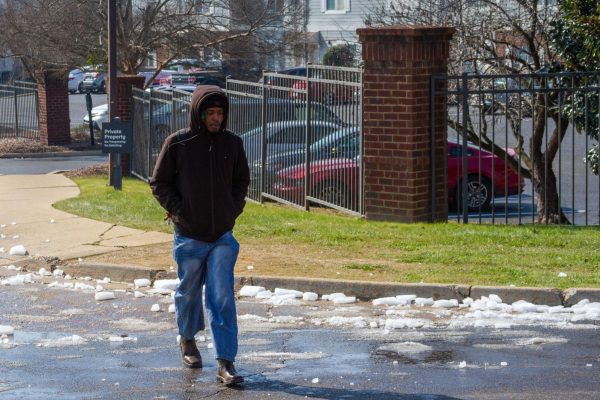
According to the Regional Transportation Plan for Starkville, MSU, and Oktibbeha County, “Even if most of a pedestrian trip is comfortable, having an uncomfortable segment can ruin the experience or dissuade people from walking.”
Naturally, it is fair to assume that residents troubled by the issue would try to have it resolved. But it is interesting to note that these complaints have never reached the apartment complex.
In an email conversation with Joanna MacAdie, Global Communications Director of Yugo, she quotes a response from her spokesperson that ‘Yugo has not received any direct feedback from residents regarding concerns about the lack of a crosswalk between the property and the Sprint Mart.’ According to the spokesperson, Yugo has 880+ beds, which mostly serve students attending MSU.
The regional transportation plan from 2022 identifies the increased pedestrian traffic in the Sprint Mart and Magnolia Hall area. Though there is no direct mention of plans to build crosswalks there, their map on composite pedestrian needs analysis shows that this road area falls under the ‘Low Suitability/High Demand’ category, which is also a high investment priority.
The transportation plan looks promising, but their short-term plans span from 0-10 years. With over 50 short-term bicycle and pedestrian projects, it is harder to ensure the safety concerns, and without proper follow-up and emphasis, it might be years before a crosswalk is achieved.
A research report titled ‘Underestimation tendencies of vehicle speed by pedestrians when crossing unmarked roadway’ looked through different road settings, speeds and environments to compare human perception of speed and the actual speed of moving vehicles. In general, the research showed a speed underestimation of 69.2%. The paper further adds that the tendency to underestimate the speed is higher if the speed is above 31.07 mph.
This means pedestrians are likely to think the car is approaching more slowly than its actual speed, making it more probable for pedestrians to cross the road when the car is nearer. It is equally important to note that the Oktoc Road is outside the university premises, so the speed is closer to 30 mph rather than university enforced 20mph, which means greater risk.
Concerns over crosswalk safety are not new in Starkville. In a Reflector article published in 2016, residents of what was then Helix, now Philo, raised similar issues when no marked crosswalk existed at the intersection of Blackjack and Hardy Road. This problem contributes to the recent ‘2026 is the new 2016’ trend, as students continue to face similar issues in 2026.
In 2026, another example of crosswalk-related problems can be seen near off-campus apartments around The Hangout and The Walk. This situation is interesting as sidewalks exist on both sides of the road; however, for students walking from campus, if they do not cross the crosswalk at Moseley and Wingo Road, they will end up on the opposite side of their apartments without a marked crosswalk to safely get to the other side.
Mississippi State University has made commendable efforts to prioritize pedestrian safety within campus boundaries – especially considering how many students walk on campus. However, issues involving the crosswalks just outside of campus property have been prominent since as early as 2016. The lack of change demonstrates how long this safety gap has persisted.
Perhaps the students, the university and apartment complexes can work together with the county to elevate this issue, as crossing the road should not be this hard.