
On a Wednesday afternoon, the Chapel of Memories is fairly calm. A student naps on one of the pews while another bows his head in hushed prayer. They sit in silence for a few moments until the back door opens. A tour enters to look around. The guide whispers a quick history, glancing at the students with respect, and ushers his group outside as efficiently as he led them in.
The chapel returns to silence for just a second before the next tour comes in. This one is not quite as respectful. They laugh and chat as they walk down the aisle, looking at those who occupy the pews with open curiosity.
This tour was followed by another tour, and then another. Some of them were respectful, but some of them were not. By the third tour, the young man praying gave up and gathered his belongings to leave.
Tours seem like a staple for students at Mississippi State University. The second floor of the Mitchell Memorial Library would not feel complete without too-cool high school students and their too-eager parents looking at you like you are a part of the scenery.
If those leading the tours are making a genuine effort to be respectful, why do the tours still feel intrusive at times? The issue does not seem to stem from any single guide or group, but from how frequently tours move through the same shared spaces. Even the quietest voices become noticeable when they arrive one after another, leaving little time for the campus to return to the calm students expect.
So, how do students really feel about this arrangement? Are they comfortable with the symbiosis, or do they feel preyed upon?
The irony was not lost on me when I interrupted Autumn Shanahan, a freshman studying biosystems engineering, while she typed on her laptop in the Nicholson Reading Room at the library. She smiled and agreed to the intrusion, setting her work aside for a few moments.
When asked for her opinion on the tours, she had a very positive one. For Shanahan, the tours are an opportunity to look up from her work and remember what it was like to be on one of those tours herself.
“I kind of enjoy watching the tours go through because it’s high school students, and they’re looking around and they’re deciding whether they want to go here. I personally didn’t feel disrupted, though it was a little distracting because they’re just walking through everywhere,” Shanahan said.
Faith Croskey is in her junior year of medical technology with a pre-med concentration, and her opinion of the tours was nearly as positive as Autumn’s.
Croskey likes to use the chapel to study or take a quick catnap between classes. When it comes to tours, she is split between appreciating their attempts at coexisting and the need to take a good nap. By the time I got there, she had already seen several come through.
“Some of them were [respectful] regarding to the fact that some people were here studying or taking a nap. Some of them came in here talking a little bit loud, but they immediately left,” Croskey said. “They didn’t stay too long, so they didn’t prolong their loudness.”
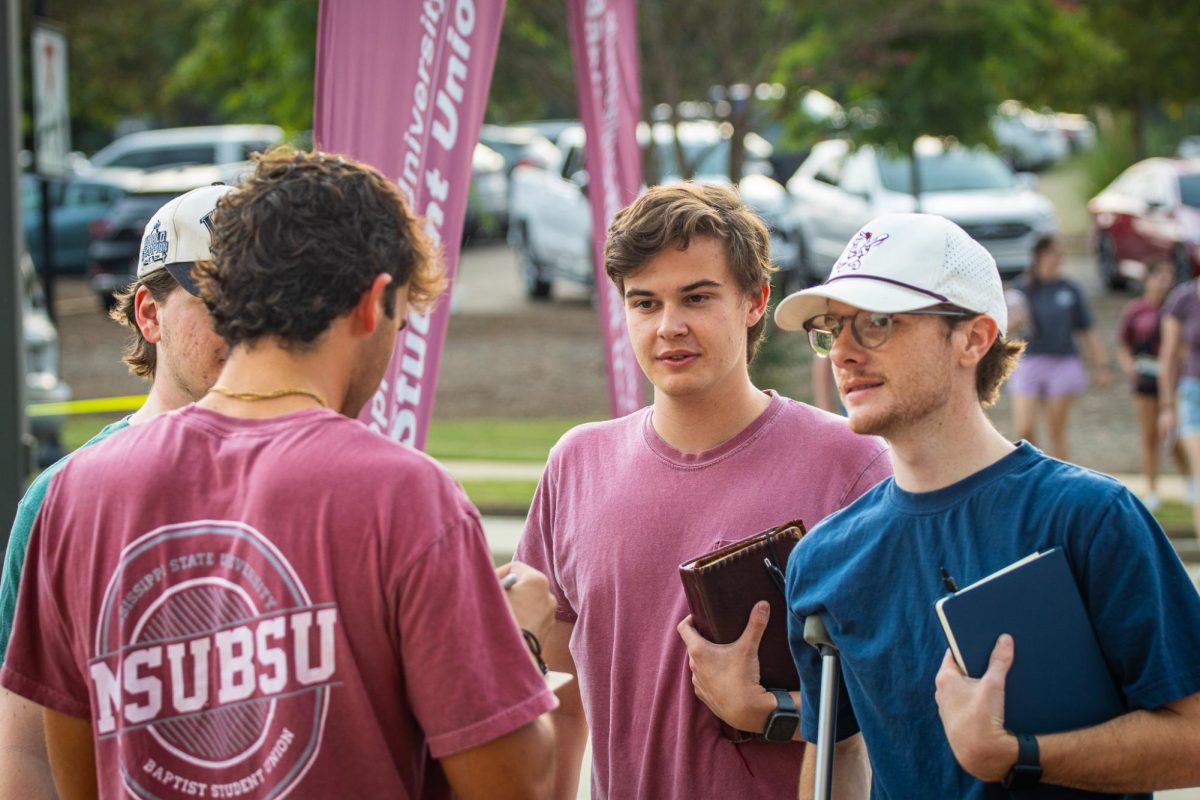
Despite the unavoidable interruption, students do not seem to mind the tours as long as they keep their intrusion brief. Tours are an integral part of the college search experience, and many of us can remember the way it felt to wander the campus with our own roadrunners not so long ago.
Soraya Dortch is a junior biomedical engineering major. She has been a roadrunner for one year and said she has loved every moment of it.
From her perspective, a tour is a way to give prospective students a glimpse into what could potentially be their futures. Despite the promotive nature of the tours, she recognizes that these are shared spaces that must be respected.
“When we’re going into the library, especially the common area, I try to take down my voice a little bit, and if they have questions, I always ask them to ask when we get back to the lobby,” Dortch said.
This is not just some code that she created to use in her own tours. It is a part of the training that all roadrunners initially go through. With this training, roadrunners are told to respect the current students as much as they can while giving visitors the best tour possible.
Tours are a necessary element of student life. Prospective students get the chance to see what life would be like as an MSU Bulldog, and current students get to experience a bit of nostalgia. The issue arises when students are bombarded with several tours at once, disrupting precious time in their very busy days.
When tours run back-to-back throughout the day, the result is not one interruption, but many small ones that slowly add up. Spacing tours out more intentionally could help preserve the balance between welcoming future students and respecting the ones already here, allowing Mississippi State’s shared spaces to feel lived in rather than constantly on display.