

On Aug. 21, Mississippi State University announced a new tailgating policy ahead of the Sept. 6 football game against Arizona State University.
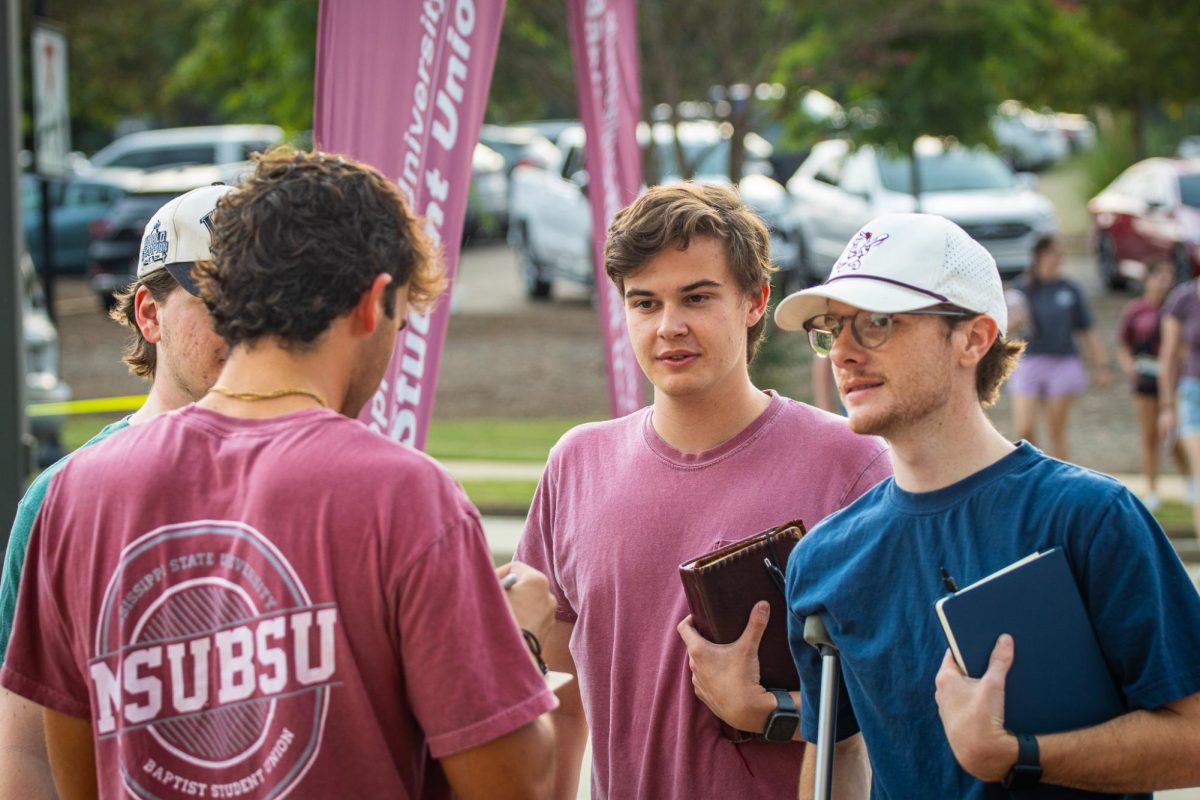
Student tailgating was moved to the amphitheater near the Newell-Grissom Building, with The Junction and portions of the field near MAFES Sales Store and the fan fest zoned exclusively for customers of Southern Tradition Tailgating, a company co-owned by MSU faculty member Brad Vickers, a professor in the Department of Kinesiology.
Previously, these two positions were switched, with students and alumni taking on The Junction, and Southern Tradition Tailgating customers split between the Amphitheater and the front of the Agricultural and Biological Engineering Building.
A standard tailgating package for Southern Tradition customers runs for $3,500. This package includes access to a “Premium Tailgating Spot at The Junction,” a tent, a flatscreen TV, a network receiver, rope lighting, chairs, tables and table cloths, on-site staff and a setup and takedown service.
In the announcement, the university emphasized a focus on “fan and family safety,” stating that the “safety and security of our university community and visitors is always our primary concern.” In recent years, some fans and students have complained about an unsafe and rowdy atmosphere taking place at campus tailgating events.
In 2023, a fight broke out in the Junction, causing the university to place new rules and restrictions on tailgating. These restrictions included a total ban on speakers and visible alcohol. Anyone who violated these rules was subject to removal without a ticket refund or compensation.
These rules remained relatively unchanged until Aug. 21, with the complete removal of public tailgating in The Junction. MSU defends its decision to switch to a paying system, claiming that it provides a “consistent system where there are accountable persons for behavior.”
For years, students and alumni have packed The Junction to the brim with school spirit and pride, a tradition that is now locked behind a paywall for those who do not want to move to the amphitheater or one of the public tailgating areas.
Truth is, no matter what restrictions you place, fights and heckling cannot be entirely prevented. Restricting factors such as alcohol, drugs and even personal speakers can improve the chances of preventing fights, and ever since these changes have been put in place, I think they have.
So, if these restrictions have been effective in preventing major violent events during tailgating, why the sudden new system? What about The Junction itself as a tailgating area invokes violence that they think will not be invoked in the new amphitheater location?
The decision to remove students from the Junction was not the best, but rather, the easiest decision. While having a paid area allows those who do act out in The Junction to be easily held accountable for their actions, monetizing that area does not directly decrease the chances of a violent event happening. Instead, it moves students who cannot afford a tailgating package in that area out of sight of those who can. These students are more likely to gather in other areas on campus, such as fraternity houses, where fights are just as likely to happen.
While the university may think giving students the freedom to celebrate in their own way in a new space is the best solution to the problem, it is setting a precedent that things considered as tradition and a sense of community can be put at a price at any moment. If one tradition is monetized, another can follow.
When the new tailgating system was announced, I predicted more people would be convinced to buy a Southern Tradition package so they could claim a spot in the new “premium” Junction, erasing a community tradition and monetizing it to the mass public. When I attended the game this Saturday, I noticed the lack of tailgates set up near the amphitheater and the abundance of Southern Tradition tailgates in the Junction.
The answer to reducing violence is very simple: banning large speakers, visible alcohol, more security and more cameras, steps that have already been taken and have been effective in reducing fights. While I do believe safety was a motive for the change, I also believe it was not the sole motivation.
The decision to move students out of The Junction is not the most effective answer to violence. Even in the new monetized area of The Junction, violence can still and most likely will occur in the future.
In fact, while walking back to my car after the game, I was verbally heckled by a group of tailgaters in The Junction tailgating under a Southern Tradition tent. No intervention took place. No one was held accountable for their behavior.