
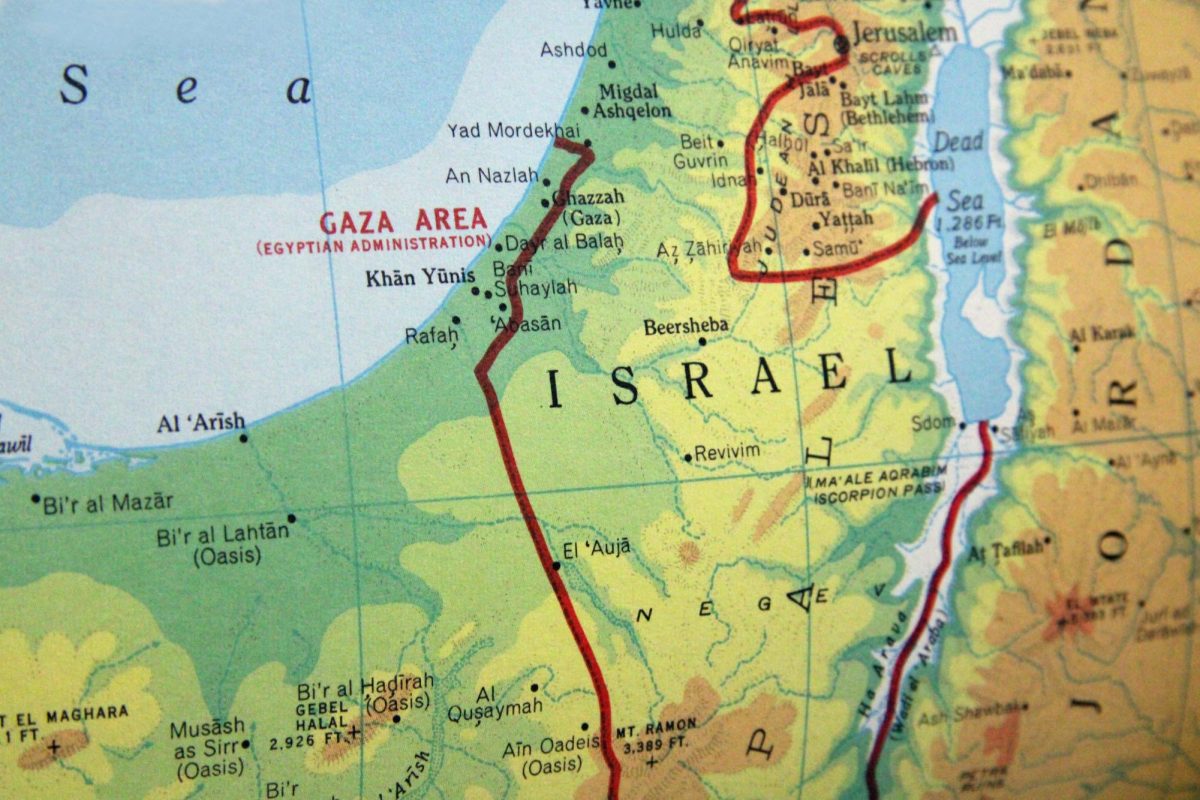
The ongoing conflict and humanitarian crisis in Gaza during the Israel-Hamas war have raised urgent questions on how large-scale violence persists, and how societies justify or ignore human suffering.
The devastating scale of civilian deaths, destroyed infrastructure blocking aid and massive displacement is causing people to seriously challenge the moral system that allows such horrific conditions to exist.
Reports from major humanitarian organizations and news outlets paint a severe picture. According to the World Health Organization, civilians in Gaza are “starving, sick and dying,” as a result of continued restrictions on deliveries of aid and the collapse of essential services, leaving hundreds of thousands in catastrophic food insecurity.
Amnesty International similarly reports evidence that starvation is being used as a method of warfare, describing the aid distribution system as a “death trap” for civilians. Human Rights Watch has documented repeated attacks on Palestinians attempting to obtain food as actions the organization classifies as war crimes.
Beyond the immediate violence, long-term damage to hospitals, water systems and shelters has displaced much of the population, according to the International Rescue Committees Emergency Watch List report for 2025.
As winter approaches, conditions in Gaza are deteriorating. The Washington Post reports that Gazans do not have the shelter, warm clothing or basic supplies to face exposure to flooding and cold weather. Physicians for Human Rights has additionally documented the collapse of the medical system due to restrictions on essential supplies, emphasizing that preventable deaths occurred as a result.
Despite this documented suffering, large segments of Western society, including parts of the American South, continue to justify or overlook the crisis in this region. Cultural nationalism and selective interpretations of Christianity often shape political attitudes. Support for Israel is frequently framed as a moral or religious duty, even when actions contradict Christian teachings such as compassion, mercy and respect for human life.
Religious arguments regarding the Gaza conflict often invoke claims of divine land ownership, based on Old Testament promises made to Abraham’s descendants. However, biblical scholar Walter Brueggemann challenges this view. He argues that these promises were conditional upon moral behavior and that the name “Israel” originally denoted Jacob and his descendants as a people, not a modern nation-state. Consequently, appeals to scripture in this context may function more as markers of cultural or political identity than as accurate theological claims.
In the southern United States, where religious identity and patriotism are closely linked, support for Israel often stems from a broader idea: the view that both the United States and Israel are nations chosen under God. This alignment can transform religious belief into a political symbol rather than a moral framework, encouraging loyalty to national narratives instead of ethical consistency.
At the same time, widespread prejudice contributes to the normalization of Palestinian suffering, as many Americans continue to associate Palestinians or other Middle Eastern groups with terrorism, often drawing inaccurate parallels to events like the September 11 attacks. Such associations can dehumanize entire populations and make violence against them seem acceptable or even necessary. Similar forms of violence in the United States, including mass shootings, are rarely generalized to entire populations, highlighting the inconsistency of this logic.
The acceptance of suffering in Gaza, framed as an unavoidable part of defense, religious duty, or national security, reveals a deeper flaw in modern moral reasoning. Universal ethical principles are overpowered when they conflict with cultural loyalty or inherited beliefs. This conflict weakens empathy and turns religion into a mere justification for political ideologies, rather than a guide for moral behavior.
The crisis in Gaza, documented extensively by WHO, Amnesty International, Human Rights Watch and other organizations, illustrates how easily moral reasoning can be re-shaped to fill political narratives. The blending of religion, nationalism and cultural identity in the American South demonstrates how suffering can be overlooked when framed as divinely sanctioned or strategically necessary if religious and societal values are intended to promote justice and compassion. Their misuse in this context reflects a broader failure of collective conscience.