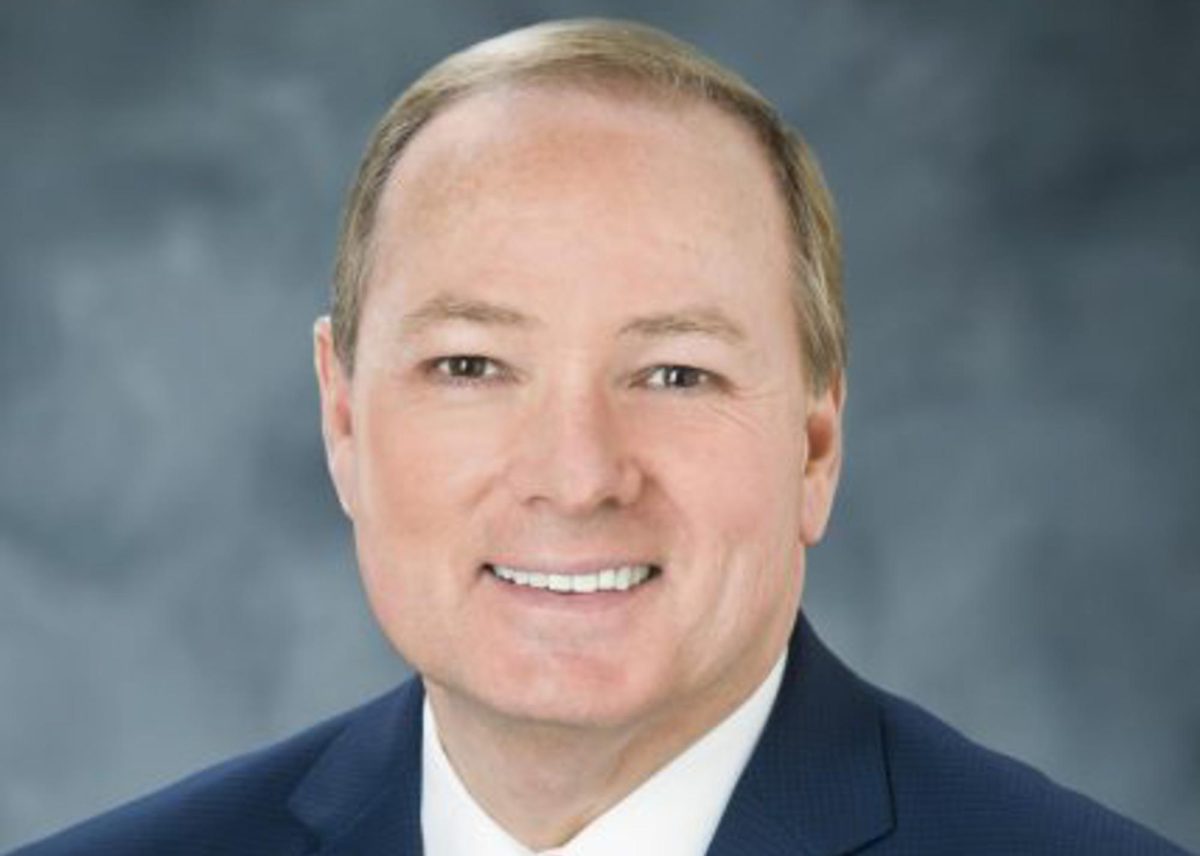

Mississippi State junior Evan Garrison did not have a speech prepared when President Mark E. Keenum announced him as the university’s newest Truman Scholar. He barely had words at all.
Standing in a room full of people as Keenum revealed he was Mississippi State’s 21st recipient of the prestigious Harry S. Truman Scholarship, Garrison said the moment did not feel real.
“I literally just looked at him, didn’t say a word and just shook my head because it wasn’t real,” Garrison said. “It was just a rush of a lot of things—late nights, hard work, all of it coming together in a moment.”
For Garrison, a junior majoring in both aerospace engineering and mathematics from Webb City, Missouri, the award represents far more than national recognition. It represents years of work, a commitment to public service and a path he said would not have been possible without Mississippi State.
Established by Congress in 1975, the Truman Scholarship is considered one of the nation’s premier graduate scholarships for students pursuing careers in public service, supporting those who plan to make a lasting impact.
Garrison, a Louis A. Hurst Jr. Presidential Scholar and member of Mississippi State’s Judy and Bobby Shackouls Honors College, also minors in artificial intelligence, political science and global engineering leadership. He serves as an undergraduate researcher in the university’s applied aerodynamics and aeroacoustics research group and as an undergraduate research assistant for the Raspet Flight Laboratory.
According to the MSU Office of Public Affairs, Garrison plans to pursue a doctorate in aerospace engineering to bridge the gap between experts and policymakers to protect critical space infrastructure and address orbital debris.
His long-term goal is to help develop solutions for orbital debris, the growing issue of man-made objects cluttering Earth’s orbit and threatening satellites, communication systems and future missions.
“A lot of times my approach to engineering problems is met with some degree of skepticism,” Garrison said. “The running joke is I’ll sell my soul to Lockheed Martin for $90,000 a year, and I’m pretty unwilling to do that.”
Instead, Garrison said he wants his work to be rooted in service and leadership.
“I’m not a politician. I don’t want to be a politician,” Garrison said, “but I am certainly public servant motivated and minded.”
For him, leadership can be simply defined.
“Leadership is fundamentally service,” Garrison said. “If I’m not seeking to serve people, then I’m not a very good leader.”
In a university release from the Office of Public Affairs, Garrison said MSU played the defining role in shaping his purpose.
“Mississippi State has fundamentally shaped both my academic journey and my commitment to public service,” Garrison said in the release. “I have been able to pursue research, internships and leadership opportunities that transformed my trajectory.”
Garrison grew up in a small Missouri town where, as he described it, most people stay close to home. He attended Harry S. Truman Elementary School as a child, making the scholarship’s name feel even more personal years later.
“It’s nice to have made it, I guess, in some capacity,” Garrison said. “Everyone from my hometown stays in my hometown or goes to the college right next door.”
Coming to MSU changed that trajectory.
He said that receiving the Presidential Scholarship made it financially possible for him to leave home and attend college without carrying the same burden his family had before.
“My sister goes to Mizzou, and to pay for her undergraduate education, she had to work four different part-time jobs at the same time,” Garrison said. “Mississippi State gave me the Presidential Scholarship, which enabled me to come here, get out of my comfort zone and have access to a wealth of resources.”
He arrived in Starkville without plans to pursue research.
That changed when mechanical engineering professor Matthew Priddy introduced him to undergraduate research, giving him an opportunity inside the lab and showing him what that work could look like.
“I had no idea what research was,” Garrison said. “It was just one of those buzzwords people threw around at orientation.”
Now, he also serves as managing editor of Endeavors, Mississippi State’s undergraduate research journal, while balancing leadership roles in debate, campus ministries and multiple academic organizations.
He credits mentors like David Hoffman, director of the Office of Prestigious External Scholarships, for helping him understand what opportunities such as the Truman Scholarship could entail.
In the Office of Public Affairs release, Hoffman said Garrison’s work stood out because of both his research and his commitment to service.
“Evan’s high-end research on tracking orbital debris and keen interest in impacting national and international strategies on this growing issue really made him stand out in the competition thus far,” Hoffman said in the release.
Hoffman added that Garrison’s leadership across campus reflects exactly what the Truman Scholarship looks for.
“He doesn’t just excel in the lab and academically, he is also committed to serving others via his leadership in numerous activities here at MSU and beyond,” Hoffman said in the release.
Those close to Garrison say that the same balance of ambition and humility is what stands out most.
Felix Airhart, a sophomore computer engineering student and one of Garrison’s close friends, said Garrison manages to stay deeply committed to both his work and the people around him.
“Evan is the kind of guy to help you fix a flat tire, buy you custard from Bop’s and then completely overanalyze the sociological ramifications of an action film,” Airhart said. “He dedicates his life to his work because he genuinely enjoys it, but still manages to make time for his friends and a whole host of extracurriculars.”
Airhart said the two first met at a church event, when Garrison offered him a ride to the club frisbee team tryouts, and their friendship grew from there.
“Since then, we’ve travelled around the Southeast together, playing ultimate [frisbee],” Airhart said.
To Airhart, the Truman Scholarship is simply the latest step in a much bigger mission.
“To Evan, the Truman Scholarship is another big step towards impacting the world through his research,” Airhart said. “His selection is yet another demonstration of his outstanding character and dedication.”
The application process itself took months of weekly meetings, revisions and self-reflection.
“It becomes this process of self-discovery,” Garrison said. “You learn a lot about yourself—what is actually motivating me, why do I want this and where do I want to be in five or 10 years.”
That belief also shapes his faith, which he said remains the foundation for everything else. During his Truman Scholarship interview, Garrison said one of the panelists asked directly how he reconciles faith and science. He said the answer came easily.
“My identity is found first and foremost in Christ, and everything I do flows from that,” Garrison said.
Even with the national recognition, Garrison said he hopes people understand the award does not define him. When asked what he wanted people to understand most about his journey, his answer had little to do with awards or résumé lines.
“I’m just a guy,” Garrison said. “I like board games and movies and sitting in coffee shops with people and getting to know them.”