
For decades, bats have been a persistent problem at Mississippi State University, frequently appearing in residence halls, football stadiums and other locations on campus. In 2013, Hathorn Hall, Mitchell Memorial Library and the Hand Lab had a significant bat issue that needed to be addressed.
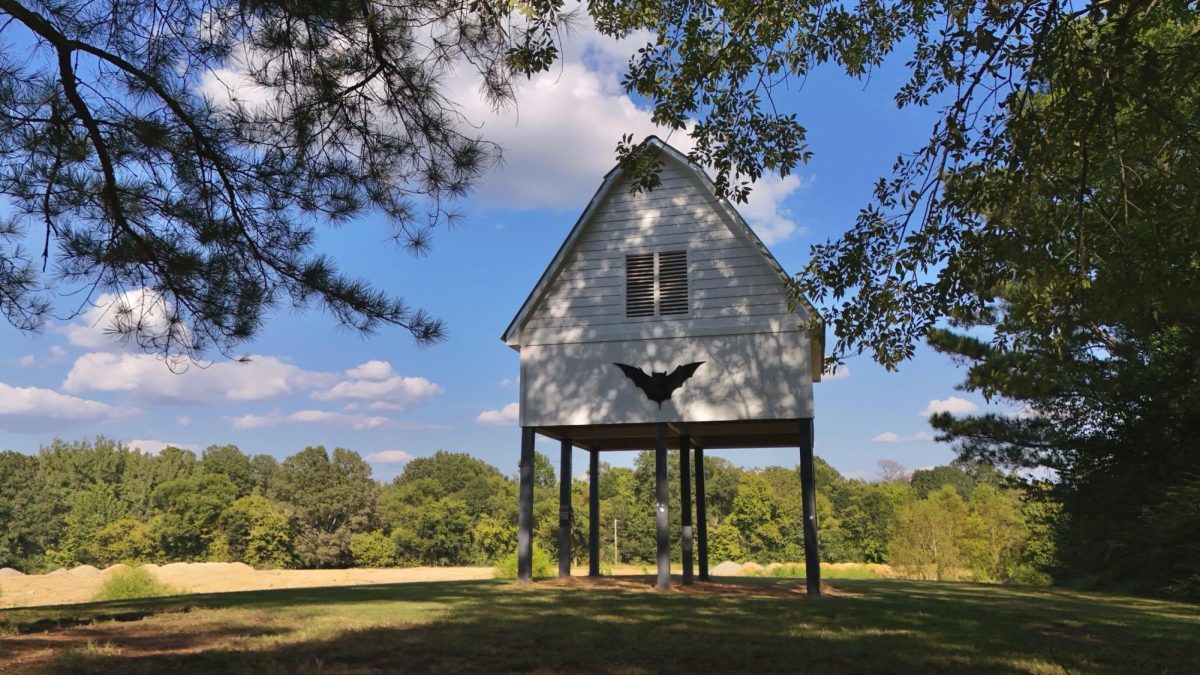
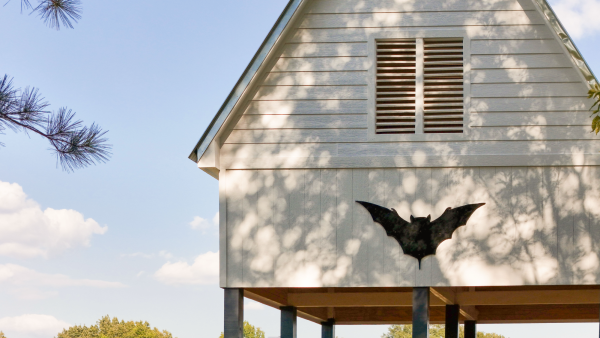
After years of discussing the idea of building a bat sanctuary, students and faculty decided to construct a bat house to provide the bats with a safe place that would not interfere with students on campus. The new bat house, a project that began in 2023, officially opened on Aug. 19.
Chris Ayers, assistant professor in the Department of Wildlife, Fisheries and Aquaculture, served as a faculty advisor on this project.
“This has actually been an idea that people on campus have had for decades,” Ayers said. “People have noticed that there were bats living on campus… but the problem is nobody could really agree on how to pay for it, where to put it, and even get permission to put it some place on campus.”
Many students were eager to get a start on this project. Karolina Heathcock, who served as a College of Forest Resources senator in the 2024-2025 academic year, said one of her roles was communicating with university officials.
“My biggest thing was just contacting campus services and contacting administration and just trying to figure out if this was going to work because the idea of having a bat house on campus, you know, some people will have issues with,” Heathcock said.
Carson McFatridge, a wildlife, fisheries and aquaculture senior, said the project was about balancing conservation with campus life.
“We want to create spaces where our wildlife and our urban settings can kind of coexist,” McFatridge said. “It’s just really cool that we have the opportunity to promote that.”
McFatridge added that the project also resonated with students who had personally dealt with bats, particularly her friend Abigail Spreen, who served with her on the Student Association. Spreen, a junior majoring in industrial engineering, told McFatridge that during her freshman year, she experienced a bat hanging out in her dorm room.
Funding became one of the main challenges. While the university has funding for sustainability projects on campus, such as the Green Fund, students in the College of Forest Resources, Student Association, Students for a Sustainable Campus and the Wildlife Society worked hard to make sure the project received the funds it needed. They submitted a proposal to the Student Association for a grant to start building the bat house.
Ayers said students first secured a $20,000 grant for the project, but the money did not cover the full cost. They later applied for an additional $6,000 from the same fund and also received support from the College of Forest Resources, the Department of Wildlife, Fisheries and Aquaculture, and the Mississippi Bat Working Group, along with other contributing organizations.
Construction began in April 2025 and finished that summer. While the structure is complete, getting bats to relocate remains the next hurdle.
“We have the largest unoccupied bat house,” Heathcock joked.
Ayers explained that they must now begin relocating these bats from their current locations around campus to the new habitat.
“We really want them to learn about the new house and then get them to naturally start using it,” Ayers said.
Beyond conservation, faculty and students said the bat house could serve as a resource for the wider community. Heathcock said she hopes it becomes an educational tool.
“It’s going to be a really great educational and research tool, and then the people that do get to see it on those guided tours are going to be blown away,” Heathcock said.
Ayers said the Student Chapter of the Wildlife Society will manage the site, including leading tours if requested.