
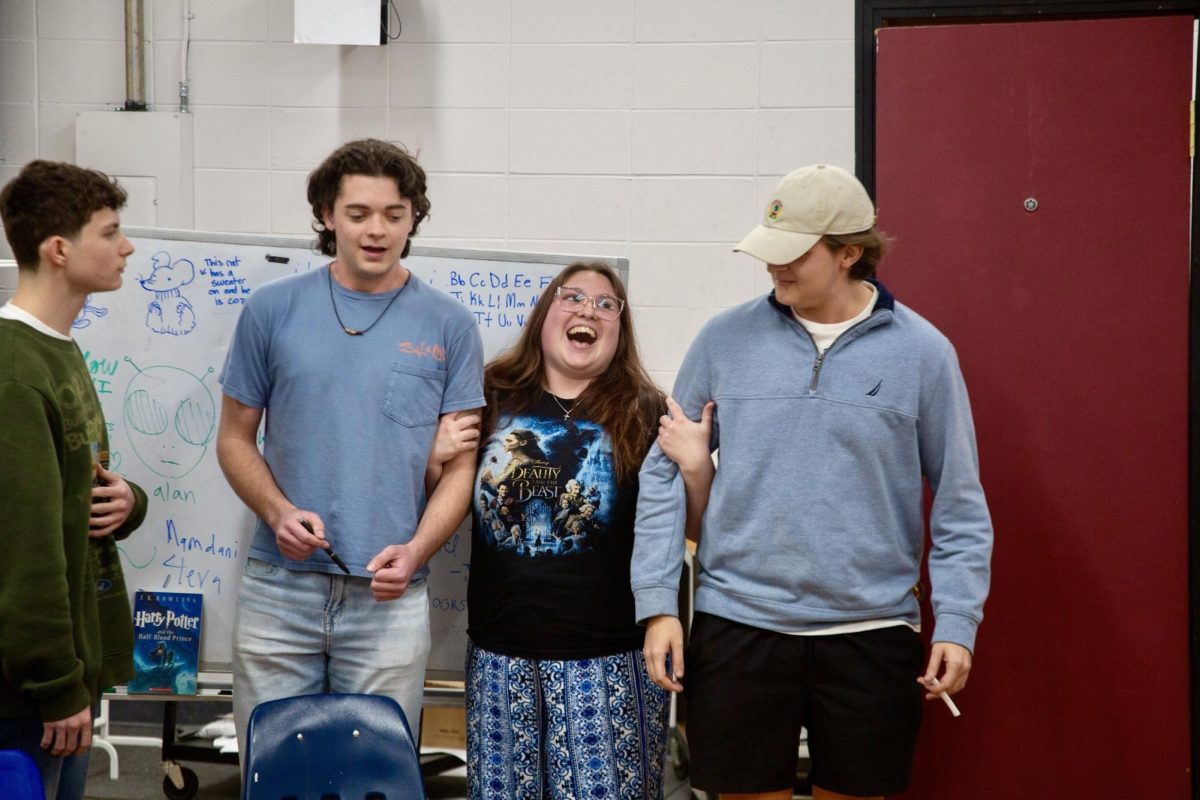
Mississippi State University’s Blackfriars Drama Society will bring literature to life later this month with its production of “Shelf Help: Tales of the Unbound,” an original play centered on the power and controversy of banned books. The performance will take place at 7:30 p.m. on Feb. 26 and 27 in McComas Hall, offering audiences an opportunity to experience a show that blends celebration with reflection and protest.
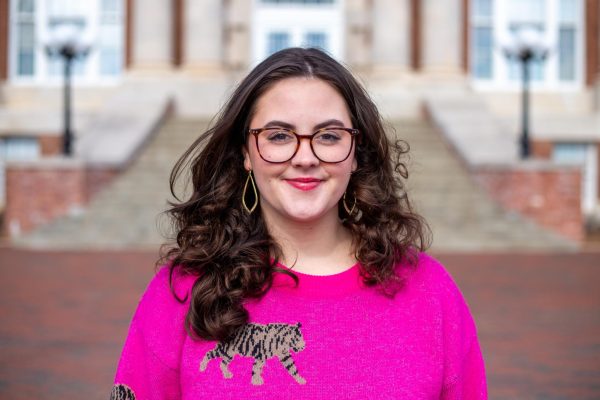
Written and directed by seniors Patricia Morgan and Jena Enfinger, who are both secondary English education majors at Mississippi State University, the play began not as a major theatrical undertaking but as a class project.
“This whole thing started out as a final project for our Theatre for Young Audiences class, and Jena and I were like, ‘yeah, we can write a script, can’t be too hard.’ Spoilers, it was,” Morgan said. “After many hours of writing, we created this play as a result of both of our passions for English and literature.”
Their inspiration came from discussions of banned books, a topic familiar to future educators navigating conversations about curriculum and access to literature. Research into books challenged across K-12 classrooms revealed surprising entries, including Shel Silverstein’s “The Giving Tree,” which helped shape the narrative direction of the play.
“We loved the idea of the books being given back to their characters just as the tree gave to the boy, and it all flowed from there,” Morgan said.
Turning this idea into a stage production proved challenging. While crafting dialogue felt natural, translating concepts into staging directions required learning the technical language of theatre production.
“Dialogue is the easy part, but writing it as if it’s getting put on stage is where it gets hard,” Morgan said. “We had to research a lot about stage directions and lighting and sounds so a crew putting this on would understand the vision.”
Enfinger echoed similar challenges, noting that adapting her storytelling instincts into script form required adjustment.
“I have always loved creative writing and creating stories, but I had never really written anything in a play format,” Enfinger said. “In the beginning, I struggled with how to describe certain things in that format.”
The pair carefully selected texts to represent different educational stages — elementary, middle and high school — prioritizing stories recognizable to their peers and audiences. They also chose books banned for what they saw as questionable reasons to emphasize the importance of examining censorship critically.
“One of the main points of our play is that the books we chose are banned for seemingly pointless reasons. Banning books in schools doesn’t do anything but take away access from students,” Enfinger said.
Morgan describes the play as both a critique and a celebration. Through symbolic characters, including “The Man,” who represents censorship authority, and “The Girl,” who advocates for understanding literature’s meaning, the production explores freedom of expression and the value of diverse narratives.
While the writers shaped the message behind the scenes, actors will bring those ideas to life onstage. Kate Jasper, a sophomore communications major with an emphasis in theatre, portrays Junie B. Jones, the outspoken elementary school character many audiences may remember from childhood reading.
“Junie B. Jones is definitely a diva,” Jasper said. “She knows exactly who she is and what she wants. She’s spunky, impulsive, blunt and honest, but she’s creative, confident and curious, and she has a good heart.”
For Jasper, revisiting familiar literary characters created a personal connection to the role.
“I grew up reading Junie B. Jones. I basically based my whole personality off her when I was in first grade,” Jasper said.
Throughout the play, her character experiences growth and reflection, particularly when interacting with characters from other banned texts.
“She kind of realizes they’re more similar than she imagined. It’s a learning moment, to be a better listener and realize we’re all just figuring our way through life,” Jasper said.
Jasper hopes audiences leave the performance reflecting on broader societal conversations about censorship and exposure to challenging ideas.
“It’s important to read stories even if they make you uncomfortable,” Jasper said. “Books and theatre force us to face the unknown, and once you see it, you can’t unsee it. You just learn more.”
Morgan and Enfinger share a similar hope for the audience’s takeaway — that viewers reconsider literature they may have forgotten or misunderstood and perhaps return to those stories with fresh perspectives.
“I hope our audience sees how much they can take away from these characters and are maybe inspired to read one of these stories again,” Morgan said.
As discussions around banned books continue nationwide, the writers believe the production’s timing makes its themes particularly relevant.
“There are people who misrepresent or misunderstand what we are reading and end up blaming the books themselves. However, the knowledge gained from these books reaches far beyond what a few close-minded people suggest,” Morgan said. “The lessons that these books teach are passed to every single reader who turns their pages and that knowledge can create the next generation of open-minded people who can stand up for what all of these characters teach them — that every book has something worth reading about.”
By blending humor, nostalgia and social commentary, “Shelf Help: Tales of the Unbound” invites audiences to revisit familiar stories, question assumptions and consider the lasting impact literature can have on individual growth and collective understanding.