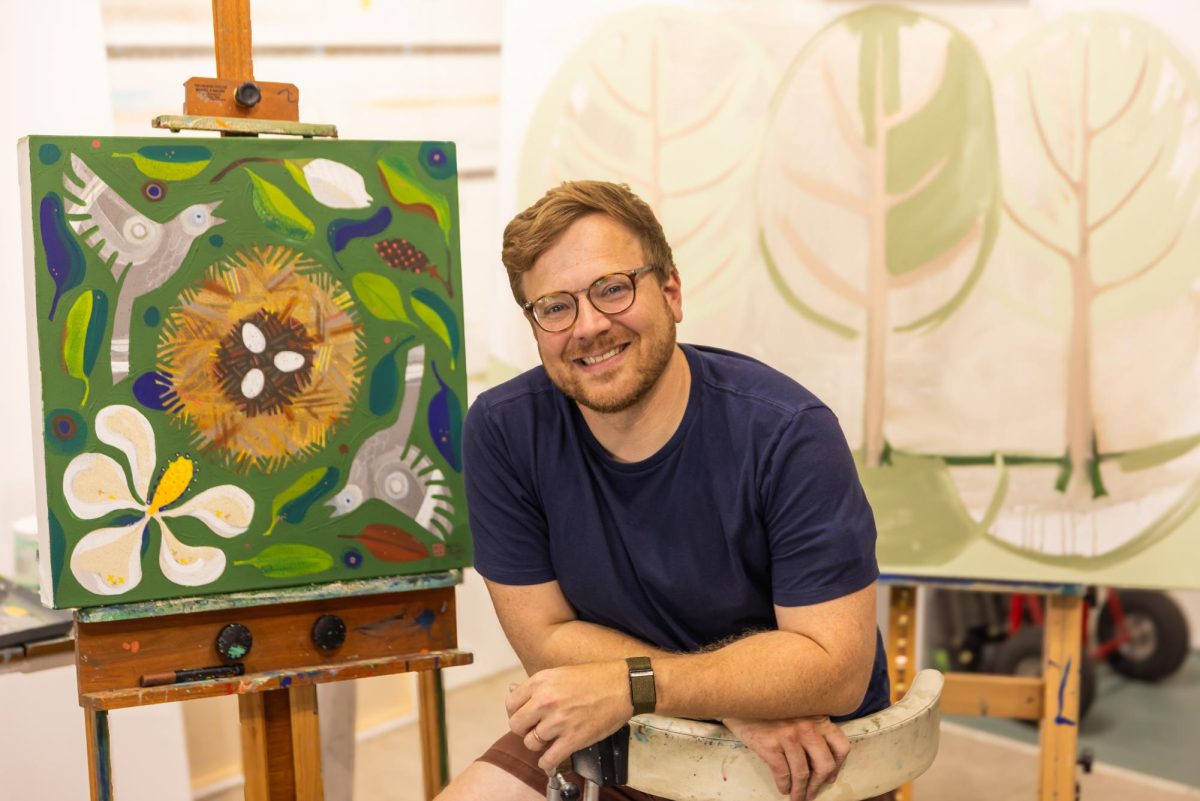


For Nikolay Minaev, a third-year doctoral student in agronomy and turfgrass management at Mississippi State University, experimentation does not always happen in a lab. Sometimes, it takes place in a garage filled with the smell of oil and the sound of an engine.
Originally from Krasnodar, Russia, Minaev’s journey into car restoration began out of necessity rather than ambition.
“My first car was an old Russian clunker my dad gave me,” Minaev said. “There was always something wrong with it, and being a student, I didn’t have a budget for car shops. So, I had two options — learn how to fix it myself or walk.”
That dilemma sparked a hands-on education in mechanics. He spent hours reading online and watching tutorials, learning through trial and error how to keep his car running. What began as a survival skill slowly turned into a passion for understanding and rebuilding vehicles.
In 2018, Minaev came to MSU as a Fulbright Scholar. His home city is located in a very agricultural region with a warm climate. It is also home to Kuban State Agrarian University, which he attended for his undergraduate degree.
“I just went ahead with agricultural chemistry there. However, the more I studied, the more I liked it. Eventually, I graduated with a bachelor’s degree and by chance learned about this Fulbright scholarship that gives an opportunity to study in the U.S,” Minaev said.
Minaev explained that even though he used to work with row crops like corn and rice, he became interested in the turf-grass industry after talking to MSU Professor James McCurdy, a Turfgrass Extension Specialist in the Department of Plant and Soil Sciences.
Minaev is currently working on the “Refuge Lawn” project with McCurdy, other professors and graduate students from Auburn University and the University of Georgia. The project was funded by the United States Department of Agriculture until January 2025. However, those involved are currently working to secure funding for its continuation.
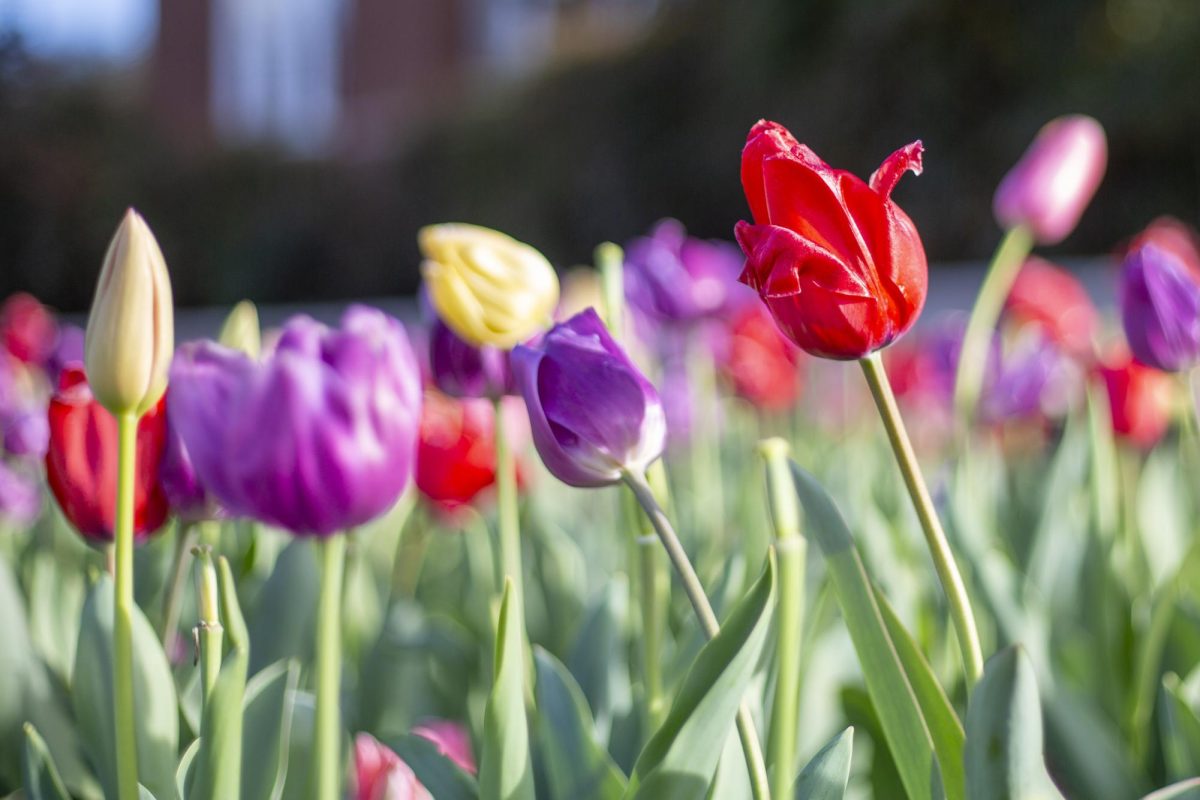
“The goal of this project is to develop a pollinator-friendly lawn by incorporating native flowering forbs into turfgrass systems,” Minaev said.
James McCurdy spoke in more detail about the project.
“The project focuses on determining how lawns, which comprise one of the largest managed landscapes in the country, can better support pollinators,” McCurdy said. “We’re evaluating how flowering plants — we call them forbs — can coexist with turfgrass in a way that’s both ecologically beneficial and practical for homeowners and professional turf managers.”
McCurdy also described Minaev.
“Nik’s personality combines curiosity with hard work. He’s hands-on, thoughtful and always looking to understand why something works… And yes, I’ve seen his car project video. Nik has interesting hobbies,” McCurdy said. “I frequently assign him mechanic duties fixing broken equipment.”
In addition to his work with McCurdy at MSU, Minaev has continued to rebuild old cars as a hobby in his free time. Among his most memorable projects was the restoration of a Toyota Corolla AE86 Trueno, a vehicle with legendary status in the automotive world that is now hard to find in good condition, according to Minaev.
“Anyone who’s into cars at least heard about it [AE86],” Minaev said. “Originally, it was just an ordinary Corolla, but soon people realized that it is light, well-balanced and very fun to drive.”
He went on to further explain the history of the car. It was used in all kinds of racing and started a new racing style. This was known as drifting.
The AE86 also rose to global fame through the Japanese anime “Initial D,” in which the protagonist drives the car through treacherous mountain passes. He explained that it became an icon.
“Just like in the anime, the car is an underdog. From the outside, it’s just an old, boring Corolla, but in reality, it left a huge impression on both racing and culture itself. I guess that’s what gave [me] so much motivation to restore two of those,” Minaev said.
He went on to post the process of restoring the AE86 on YouTube. He uploaded a video of the restoration on YouTube in 2020 but did not get many views until 2021. The YouTube channel at the time only had 30 to 40 subscribers. This consisted of his family and friends. His channel now has 10.2 thousand subscribers with his most popular video totaling 2.3 million views.
“I never expected it to go big,” Minaev said. “I was just using it to share some travel videos with them [family and friends] or even just for me personally to save some videos from my life and store them there.”
Minaev explained how he enjoys knowing so many people appreciate his work, but he also discussed how he is surprised his videos made such an impact.
“I realize that there are so many other videos, projects and things other people made who did it better with more dedication and passion, and they deserve the love more than me,” Minaev said. “I’ve been told it’s called the Imposter Syndrome, but I actually believe that my video didn’t deserve the attention it got. After all, it’s just me in the garage with limited funds, tools and knowledge.”
Others acknowledge that the videos were well done and deserved to go viral. One of those people is Julianna Portilla, a sophomore at MSU majoring in biological sciences.
“I know Nik through the club tennis team, and his car restoration work is really impressive,” Portilla said. “His YouTube videos make the process easy to follow and show how much technical knowledge goes into what he does. His patience and skills are admirable.”
For Minaev, his dedication to his car projects and education also parallel each other.
“Car restoration, PhD project or any other big endeavor, it’s all the same,” Minaev said. “It’s all fun and games in the beginning, but when initial excitement starts to wither, and the finish is still far away, it gets ugly. What helps me every time I start losing motivation is to focus on either small results — what did I do today and how it got me closer to the finish line — or the end result itself.”
Eventually, financial circumstances forced Minaev to sell his cars, a bittersweet decision for someone so closely tied to his projects.
“I hate to sell any of my cars because I put my heart and soul into each one of them and regret selling them even after, but at the same time, being a grad student means having a very limited budget,” Minaev said.
From fixing a rusty old car to pursuing a PhD, Minaev has built his path piece by piece. His story is a reminder that dedication — no matter the field — can transform obstacles into opportunity.